RNA therapeutics and gene editing for osteoarthritis, kidney disease, and solid tumors.
A therapeutic molecule can only work if it reaches the right place. I engineer nanomaterials around two connected challenges: moving through dense tissue and releasing therapeutic cargo inside cells.
My work uses Janus base nanoparticles (JBNps) and related Janus base nanomaterials—carriers assembled through interactions inspired by DNA—to connect nanomaterial structure with delivery and biological function. I am applying this platform to osteoarthritis, kidney disease, and solid tumors, while extending its capabilities toward CRISPR–Cas9 delivery.
From delivery to disease
A platform built around therapeutic needs.
Each application starts with a different biological barrier. The shared strategy is to adapt carrier assembly and cargo delivery, then measure whether reaching the target changes a disease-relevant outcome.
01 · Osteoarthritis
Reach the joint. Preserve function.
Cartilage presents a dense matrix that can limit access to its cells. I am developing local RNA delivery approaches to help therapeutic cargo reach cartilage and other joint tissues.
Therapeutic goal. Modulate inflammatory pathways and protect cartilage, connecting delivery with joint tissue responses and functional outcomes in preclinical models.
Current preclinical research · Conference-reported OA studies
Therapeutic activity depends on reaching the relevant cells within an organ. I am investigating how JBNp formulations can support delivery to kidney tissues for RNA therapy and gene-editing applications.
Therapeutic goal. Establish a delivery platform for future interventions in kidney disease by evaluating tissue distribution, intracellular access, and functional cargo delivery.
Current research direction · Proof-of-concept studies in progress
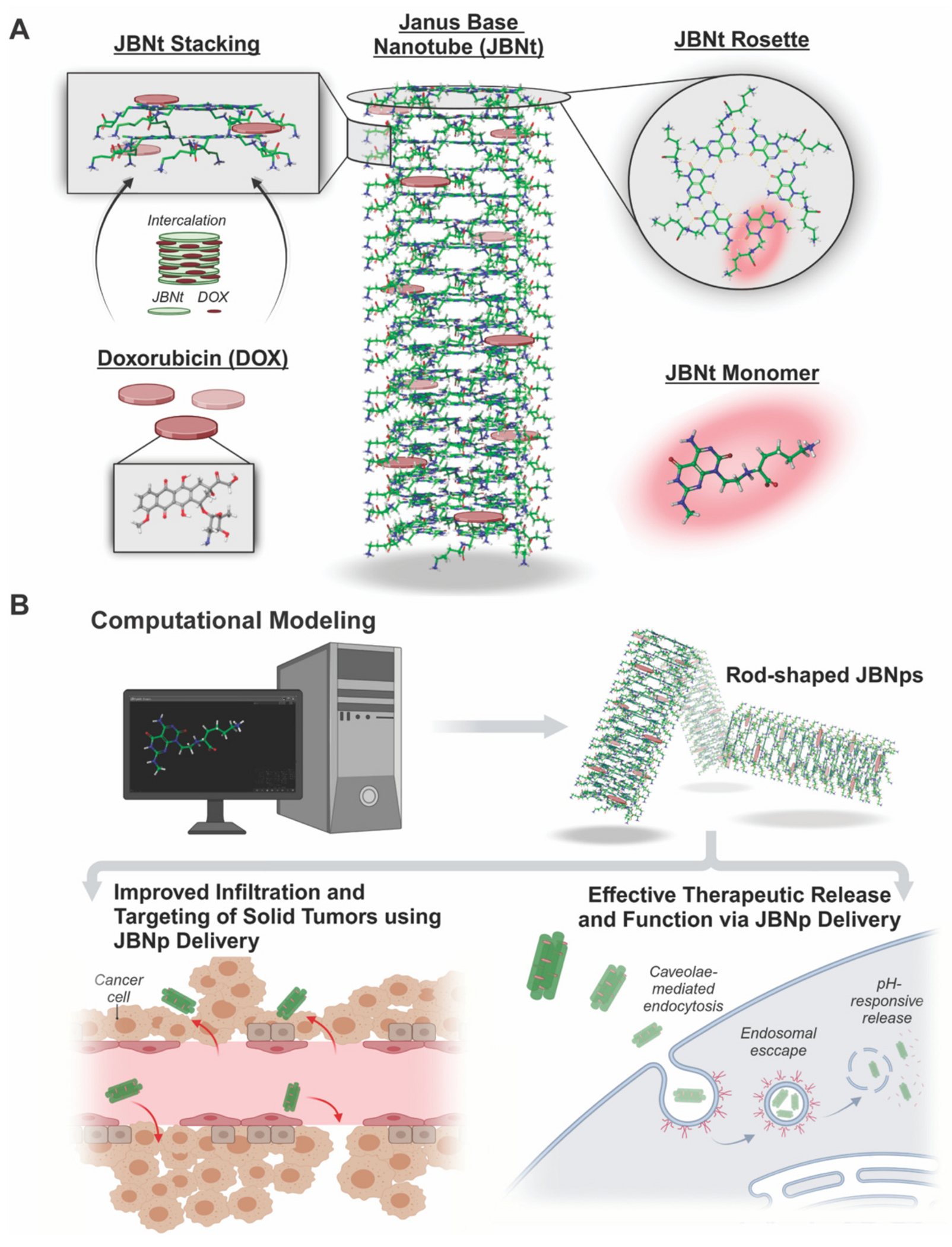
Dense tumor tissue and drug resistance create barriers at different scales. My published work investigates rod-shaped carriers for tumor penetration and sphere-like carriers for drug–siRNA co-delivery to suppress a resistance pathway.
Therapeutic goal. Improve access to tumor cells and pair complementary treatments. Published studies evaluated delivery and antitumor activity in ovarian cancer cell, spheroid, and mouse models.
The translational focus: connect where a carrier goes with what its cargo does. Across these applications, the next steps are disease-specific efficacy, tolerability, and reproducible formulation.
Current research
JBNp delivery for CRISPR–Cas9.
Can the carrier make gene editing accessible in the tissues that need it?
I am extending JBNp technology beyond RNA-mediated gene silencing to the delivery of CRISPR–Cas9 components. The aim is a nonviral delivery platform that protects gene-editing cargo, supports cellular entry and intracellular release, and enables editing at the intended site.
My current focus connects cargo packaging, tissue-directed delivery, and functional editing. Early proof-of-concept work motivates further evaluation of editing efficiency, specificity, and tolerability in relevant models, including the development of kidney-directed applications.
This direction builds on the intracellular delivery foundation established in my PNAS study. Gene editing is an active research area within the platform; therapeutic benefit must be established separately for each disease.
Nanomaterials, delivery, and therapeutic function.
Three studies establish the experimental foundation for these applications, from intracellular RNA delivery to tumor transport and combination therapy.
01
PNAS · 2021 · First author
RNA delivery & endosomal escape
Getting RNA to the place where it can work.
Cells often trap incoming RNA inside membrane-bound compartments called endosomes. In my first-author study, I developed DNA-inspired nanopieces to help small interfering RNA (siRNA) reach the cytoplasm, where it can reduce expression of a target gene.
Published finding. In cell experiments, the nanopieces improved endosomal escape relative to the lipid comparator and supported gene silencing with lower cell toxicity than the delivery agents tested.
This work connects carrier chemistry to a functional result: RNA that reaches its site of action. It provides a foundation for investigating intracellular delivery across therapeutic applications.
Nanopiece assembly and cellular uptake. Nanomaterial characterization, electron microscopy, and confocal imaging examine siRNA-containing nanopieces and their entry into cells. Lee et al., PNAS (2021), Figure 1. Reproduced unchanged under CC BY 4.0.View full-size figure ↗
02
Journal of Controlled Release · 2025 Co-first author
Nanoparticle design & tissue transport
Designing carriers for difficult-to-reach tissue.
Dense tissue can keep a treatment from reaching the cells that need it. I co-led a study combining computational modeling, nanomaterial characterization, and biological testing to develop rod-shaped Janus base nanoparticles for drug delivery.
Published finding. The rod-shaped formulations improved penetration and tumor targeting relative to non-rod-shaped and liposomal comparators in the ovarian cancer models studied. Drug-loaded carriers also reduced tumor burden in a mouse xenograft model.
The results make carrier geometry and molecular assembly practical variables to investigate alongside composition. They motivate testing which design features improve delivery in other tissue environments.
From molecular building blocks to tissue delivery. A published overview of nanotube assembly and computation-aided carrier design. Lee, Zhang et al., Journal of Controlled Release (2025), Figure 1. Reproduced unchanged under CC BY 4.0.View full-size figure ↗
Pairing chemotherapy with a second line of attack.
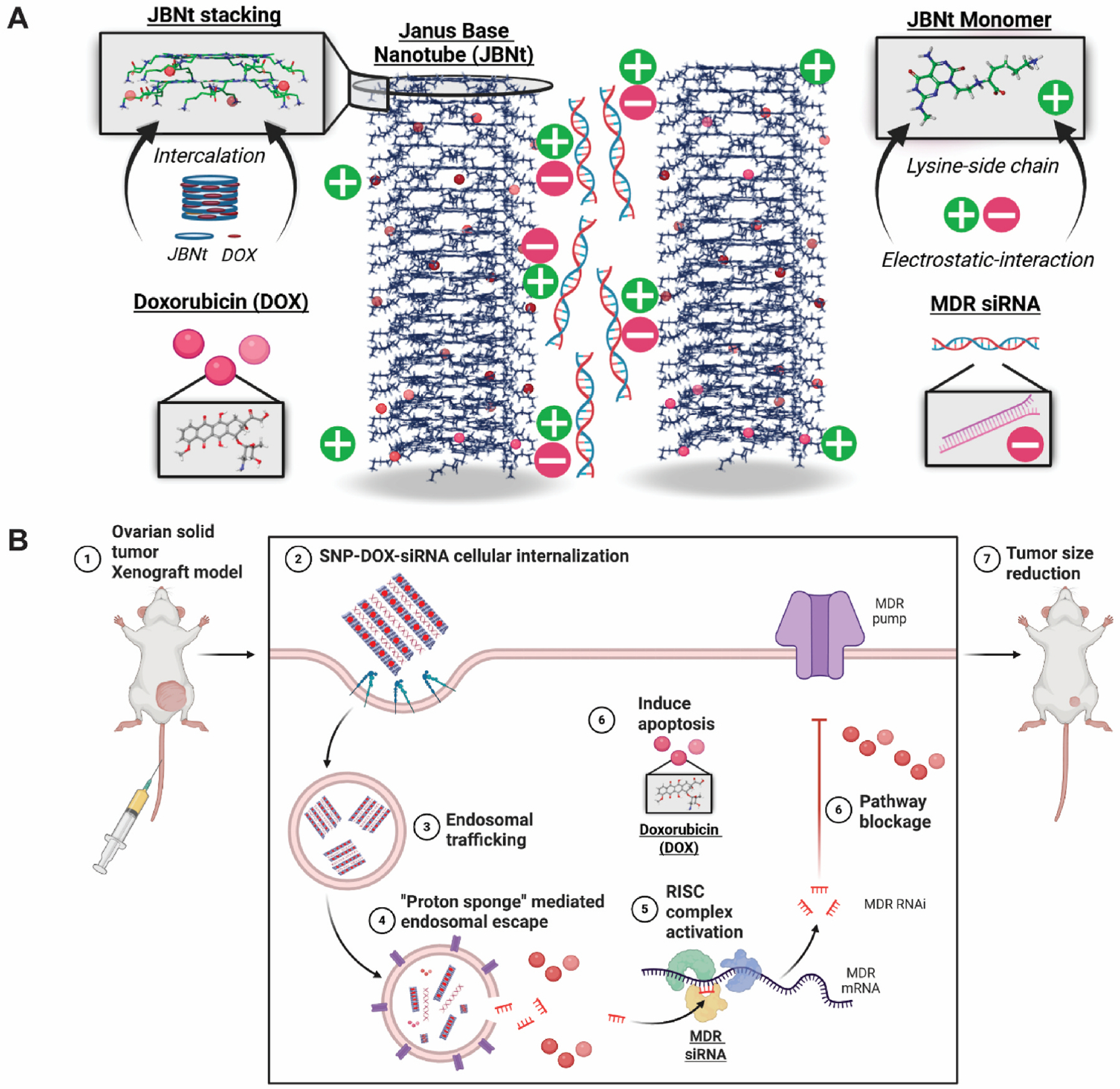
Cancer cells can resist chemotherapy by pumping drugs back out. As co-corresponding author, I helped develop and evaluate sphere-like Janus base nanoparticles that package doxorubicin with siRNA targeting MDR1, a gene involved in drug resistance.
Published finding. Co-delivery supported MDR1 silencing and increased cancer-cell apoptosis in cell and spheroid experiments. The formulation also showed antitumor activity in an ovarian cancer mouse model.
This preclinical study connects two functions in one carrier: delivering a drug and suppressing a resistance pathway. It informs my interest in designing delivery systems around complementary therapeutic mechanisms.
Drug–siRNA co-delivery · Multidrug resistance · Preclinical cancer models
Combining chemotherapy with gene silencing. A published schematic of drug and siRNA co-delivery and the proposed mechanism studied in preclinical models. Zhai et al., Materials Today Advances (2026), Figure 1. Reproduced unchanged under CC BY 4.0.View full-size figure ↗
Looking ahead
Future research vision
My goal is to establish an independent research program in RNA therapeutics and gene-editing delivery for osteoarthritis, kidney disease, and solid tumors. Building on published delivery studies and current platform development, I plan to pursue three connected directions:
Nanomaterial design for biological barriers. Link carrier composition, assembly, and geometry to tissue transport and intracellular release.
Disease-relevant models. Connect distribution and cargo function with joint tissue responses, kidney delivery, and tumor penetration using models suited to each application.
RNA therapy and gene editing. Develop JBNp delivery for therapeutic RNA and CRISPR–Cas9, evaluating each modality’s efficacy, specificity, and tolerability.
The aim is to develop a clearer relationship between what a carrier is made of, where it goes, and what its cargo does.
Collaboration & translation
Moving a delivery technology forward requires a connection between nanomaterial design and a therapeutic need. I bring experience in nanomaterial synthesis, imaging, and biological evaluation to collaborations in joint disease, kidney disease, and cancer. My aim is to connect delivery measurements with functional outcomes and build the evidence needed for translation.